
Delicious sustainably sourced coffee
Expertly roasted in Marlow
Our best-selling coffee and more
El Salvador: Finca Ethiopia: One of the flagship farms of Los Naranjos Café,
Located in the Apaneca region of Ahuachapán, El Salvador. Established in 2018, this 34.5-hectare farm was revitalized and renamed to honor the birthplace of coffee. Despite its size, only 13 hectares are cultivated, with the remainder preserved as natural forest to protect local flora and fauna.
The farm sits just behind the Ilamatepec Volcano, benefiting from rich volcanic soil and a climate ideal for coffee cultivation. The coffee is grown entirely under shade provided by native trees, contributing to its exceptional quality. Notably, Finca Ethiopia produces Gesha coffee, renowned for its bright, juicy, and exceptionally clean profile,
In line with sustainable practices, Finca Ethiopia employs manual weeding using tools like machetes, avoiding chemical herbicides. Soil studies guide their nutrient management, and measures such as soil conservation work and water collection pits protect groundwater. The cherries are carefully tested for sweetness before harvest, ensuring only the best are selected for processing
Finca Ethiopia's commitment to quality and sustainability has garnered recognition, including a 22nd-place finish in the 2025 Cup of Excellence competition.
Process: Hydro Washed
Farm: Etiopia
Location: Cerro Ilamatepec, Santa Ana, El Salvador
Altitude: 1590-2150 masl
Flavour Profile: Caramel, Cocoa nib, cherry and candied lemon sweetness.

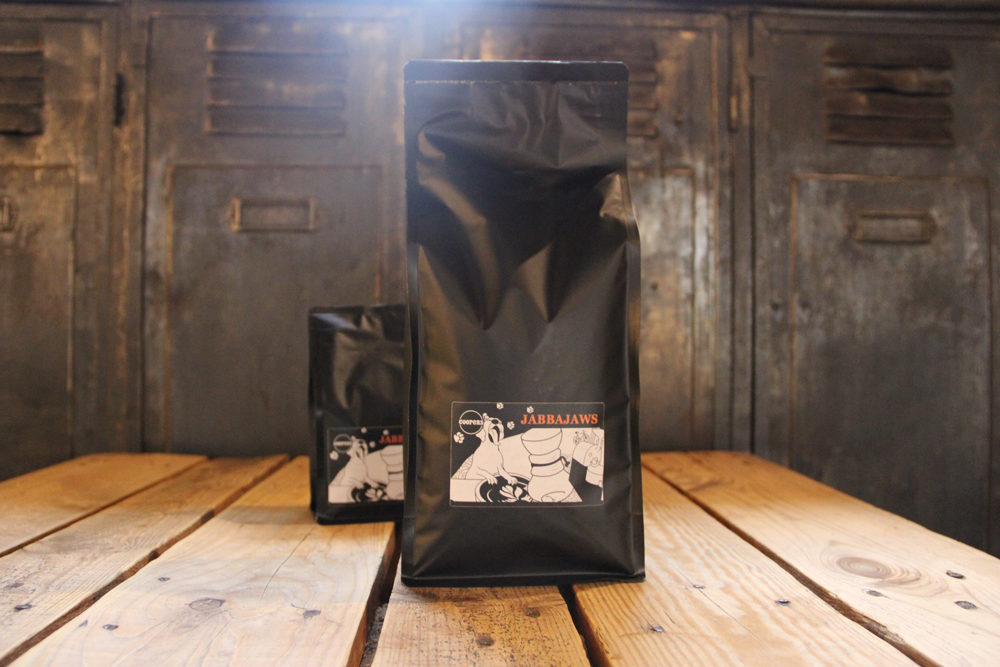
Our seasonal house blend, we spent three months developing this perfectly well-rounded, delicious coffee.
Good dark chocolate and nutty notes from tasty Brazilian coffee, and a lift of fruit flavours from Colombian and floral notes from Ethiopian beans. We believe people will appreciate this coffee in both espresso filter, and is delicious with or without milk.
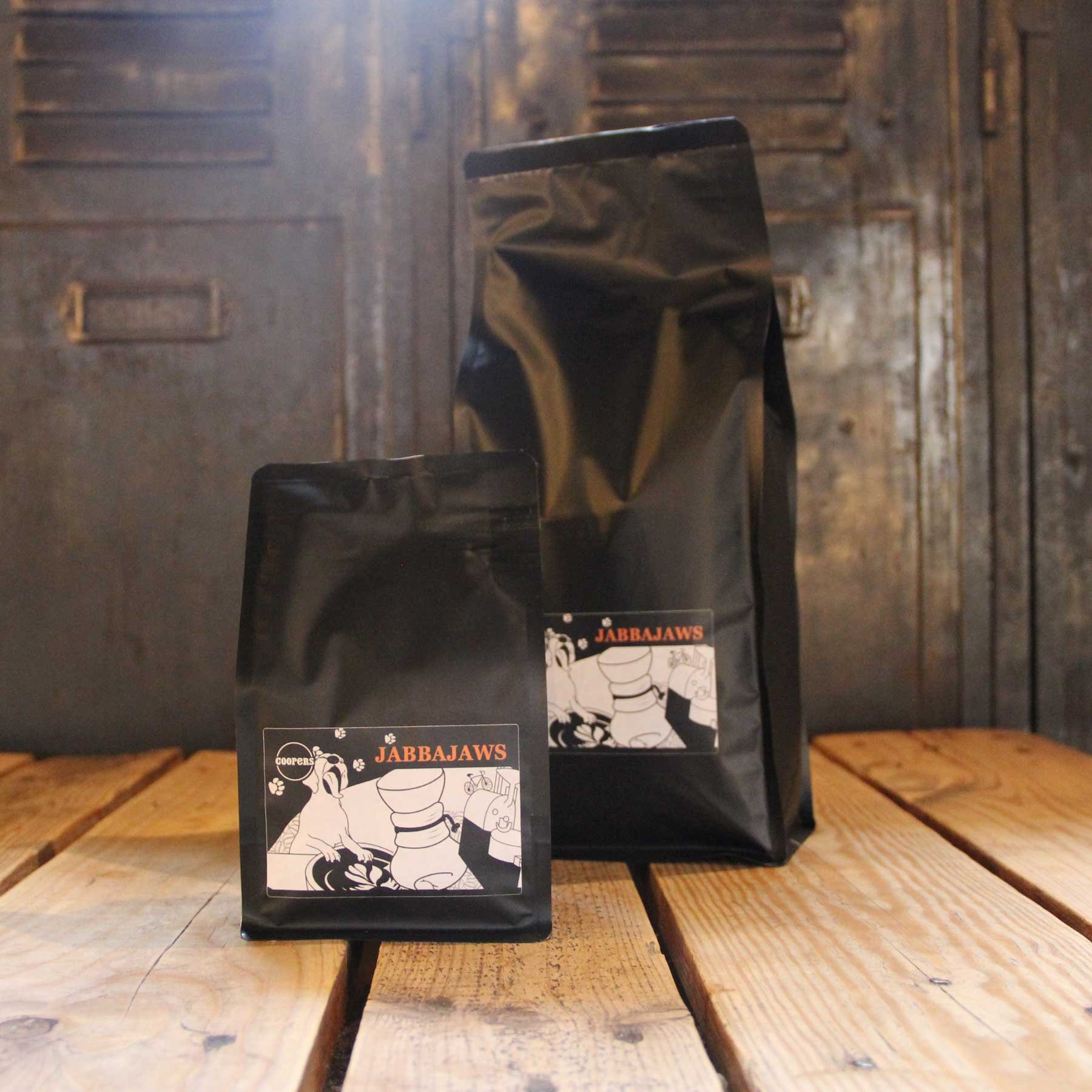
Our seasonal house blend. We spent three months developing this perfectly well-rounded, delicious coffee.
Good dark chocolate and nutty notes from tasty Brazilian coffee, and a lift of fruit flavours from Colombian and floral notes from Ethiopian beans. We believe people will appreciate this coffee in both espresso and filter, and is delicious with or without milk.
Also available in 1kg bags or as a subscription.

ORIGIN: COLOMBIA - JAIRO LOPEZ JAVA - NATURAL
FARM: LA ESPERANZA
REGION: QUINDIO - PIJAO
ALTITUDE: 1670 MSL
AREA: 13 ½HECTARES
75g
+
ORIGIN: COLOMBIA - CATA x NESTOR Yellow Papayo Natural
FARM: EL DIVISO
REGION: HUILA - Bruselas
ALTITUDE: 1850 MSL
AREA: 14 1⁄2HECTARESSHADE: NATIVE AND FRUITS TREES
75g
+
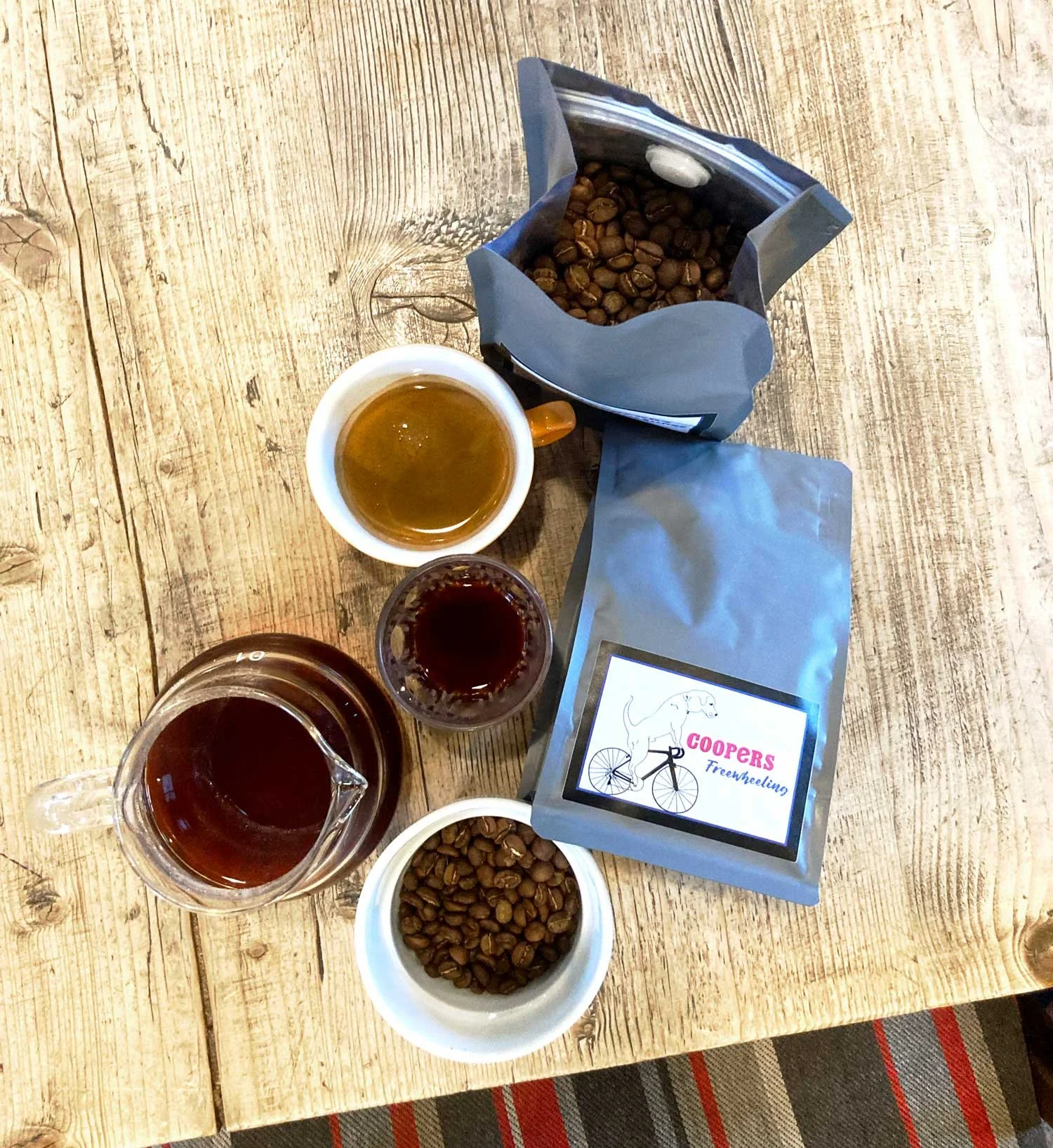
ORIGIN: COLOMBIA - LINARCO RODRIGUEZ PINK BOURBON - WASHED
FARM: CENTRAL DE BENEFICIO
REGION: PALESTINA - HUILA
ALTITUDE: 1710 MSL
AREA: 14 HECTARES
SHADE: NATIVE AND FRUITS TREES
75g
+
A selection of the 3 big special coffee’s from Cata Import. Showcasing coffee from incredible growers in Colombia. More details on each coffee on their main products with details of each process and a little intro on the farmers.
We love these coffee’s black and as a v60. But they create very interesting, unusual and punchy espresso’s as well. Ideally with out milk in our opinion but of course, as always, you should decide what you want and how to drink it! Ultimately it is yours to enjoy. We are always here purchasing the best and roasting with great consideration to bring out the best of each coffee.
3× 75g
ORIGIN: COLOMBIA
FARM: CENTRAL DE BENEFICIO
REGION: PALESTINA - HUILA
ALTITUDE: 1710 MSL
AREA: 14 HECTARES
SHADE: NATIVE AND FRUITS TREES
250g
Information from the growers:
The farm has been with us for approximately 60 years, passing from our grandparents to our parents and now to us. The farm has varieties such as Caturra, Tabi, Pink Bourbon, Geisha, SL 28. We are a family-owned company, consisting of 7 siblings, each of whom has a cultivated area of coffee. On the farm, we have a communal wet meal and drying facility where we carry out processes such as washed, honey, and natural with extended fermentation.
PROCESS + DETAILS
The fermentation temperatures range from 14 degrees to 24 degrees Celsius, and in drying, temperatures range from 18 to 22 degrees Celsius in plastic dryers and marquees (Elvas). These coffee lots were harvested at the end of December, the Pink Bourbon
TheprocessofwashedPinkBourboncoffeewasexcellent.We conducted meticulous harvesting, selecting only ripe cherries.
Then, the cherries were floated to remove the dry beans, leaves, and impurities.
Subsequently, they were pulped and left in tanks for 48 hours with open fermentation, at temperatures around 15 degrees Celsius. After washing, the coffee was transferred to dryers for 25 days.
Then, it was packed in bags and tarpaulins and allowed to stabilise for 12 days before sending samples to our customers.
ORIGIN: COLOMBIA
FARM: EL DIVISO
REGION: HUILA - Bruselas
ALTITUDE: 1850 MSL
AREA: 14 1⁄2HECTARESSHADE: NATIVE AND FRUITS TREES
250g
Information about this Coffee:
A unique collaboration to celebrate years of friendship and hard work towards coffee excellence.
Nestor Lasso and El Diviso are now household names that need no introduction, but do you really know how it all began?
When CATA was founded in 2019 with the fixed idea to discover new and talented producers who could elevate the quality of Colombian coffees, Cat and Pierre spent the little savings they had on an old pick up truck and travelled throughout Colombia literally knocking on farm doors asking producers if they had specialty coffee. Although the task was daunting, their adventurous and bold method led them to the town of Bruselas, Huila to connect with producer Henry Bonilla who had just launched the specialty program of a local coop. During a cupping session with Henry, Cat spotted a young kid who was sample roasting his coffee experiments and looking at her, amazed to see someone from Bogota and a foreigner in his town. That young and shy kid was Nestor. Nestor came up to Cat and Pierre and asked them to cup his coffees, it wasn’t anything outstanding an 86 scoring semi-washed pink bourbon a bit dirty around the edges, but Cat really liked the kindness and soft personality of Nestor and decided that she would do her very best to promote his coffees, at that time he was only 18 years old.
CATA started exporting El Diviso’s first lots to Europe and the same time using the profits made to bank roll Nestor's experiments and even funded the refurbishment of his solar dryers at the time where Cat and Pierre couldn’t even afford to pay rent. But little by little the results were showing in the cup and after a few years the Pink Bourbon Natural 180H was born.
When Cat and Pierre first cupped this coffee they knew they had a winner, so they started lobbying amongst all coffee competitors in Europe to see who would compete with this coffee but because no one knew Nestor no one wanted to take a chance on him. Cat and Pierre continued looking and finally Keith Blackburn from New Kid coffee in Ireland took his chance and won Brewers Cup in 2022. From there competitors started asking CATA for Nestor Lasso competition lots, gradually making it a regular on SCA nationals podiums in Europe and it wasn’t long until the word got out to the rest of the world. Thanks to this hard-earned fame, Nestor was able to continue his R&D and soon the Sidra Natural was born, an improved processing method inspired by the 180H.
Later that year, CATA exported a 10KG type sample to Korea, and as fate would have it, that coffee landed in the hands of Axil and Anthony Douglas, and the rest is history.
In 2019, Nestor Lasso and his brother Adrian took over the family farm and branched out into specialty coffee and experimentation rather than growing coffee like their parents. Today, at 23 and 25, the two brothers have teamed up with Jhoan Vergara, also the child of a coffee farmer, to create El
Diviso. El Diviso brings together the two-family farms, El Diviso (Nestor and Adrian Lasso) and Las Flores (Jhoan Vergara), close to the town of Pitalito, in the Huila region of Colombia. This partnership was great as these 3 young guys united their knowledge to improve quality.
At the same time, Cat & Pierre, founders of CATA Export and the 3 producers started a journey of trial and error to define the fermentation processes and protocols at the farm, with the aim to link these coffees directly to the UK market. This learning process has been time and money consuming but with an exciting outcome as today these coffees have been used in many barista competitions across Europe. Recently winning 1st place at Brewers Cup in Ireland and 3rd in Austria.
Today Cata Export and Finca El Diviso work as one team, the reason why Cat is not alone in this trip to the UK but with Nestor to finally meet all the roasteries who have been behind this process too. Nestor’s and Cat’s friendship is a good example of what Cata Export do, working directly from the farms is a very enriching process for them not only for the
complexity of topics such as agronomy but also for the relationships Cata builds which ultimately translate into an economic benefit for Cata’s community, in this way many more young producers like Nestor have stayed in coffee and have had the chance to build a career.
NESTOR’S WORDS:
I grew up in a vereda (locality, editor's note.) called Normandia, near the town of Pitalito in the south of the Huila region. I always grew up on the farm and since I can remember the region has always been a coffee zone.
Here I had a very healthy childhood, everyone knows each other and it's safe. The memories I have of my childhood are of playing in nature, playing hide and seek and I have always been super happy to be here.
In general, being a coffee producer is poorly paid and it is not very attractive. The only thing that allows producers not to starve is to eat the fruits and vegetables produced on the farm. In terms of material goods, we only have access to what is strictly necessary. Many young people therefore prefer to go to town to find an office job or a less physically demanding job because they think that the coffee is not worth it.
Beyond what specialty coffee brings economically, I have always had a passion for production. When I realized that specialty coffee offered a real possibility of economic development, and that in addition I could develop my knowledge of coffee production, and in particular the processes, I really got into it.
I understand more or less how the market works due to the close partnership we have with Cat and Pierre but also social networks allow us to see who is buying our coffees. They also allow us to see how specialty coffee is marketed in Europe.
Cat told me the importance of the sensory side of the business and she encouraged me to learn to cup to control the quality
of what is produced and to understand the impact of the processes and whether they improve or not in the cup.
Also, in Colombia there is a program we followed funded by the Colombian state and today this program is recognized as the best coffee growing school in Latin America, called SENA.
We learned a lot at SENA, me and my brother. All the theoretical bases, the science of coffee processing... everything is taught there. But the reality of the job of coffee producer is learned in the field.
We must not forget that the price of coffee is very high at the moment reason why lot of producers want to know how we work, but we quickly identify people who are really motivated to produce specialty coffee, who come to ask us questions to learn with us and those who only see it as a temporary opportunity to earn money.
What really makes the difference is the passion that the producer can have for the coffee. If you're not naturally passionate, you'll never get the trick!
Often, some coffee growers here have a lot of money because they have a lot of land and the best machines possible. But specialty coffee does not interest them, they do not see the point of changing because they are not as passionate about coffee as we are.
I have seen that specialty coffee consumption has changed a lot in recent years in the country. Until recently, Colombians only drank coffee by-products, anything that could not be
exported. But people here have realised that coffee is a much more noble product than it seems. Many producers today keep part of their harvest to roast it themselves and drink it at home. All the specialty coffee craze has really brought about a different way of looking at coffee.
PROCESS + DETAILS
● STEP1.THECHERRIESAREPICKEDATOPTIMALMATURITY
STAGE, WITH BRIX DEGREES RANGING BETWEEN 21 - 24
DEGREES.
● STEP 2. THE CHERRIES ARE PUT INTO OPEN PLASTIC TANKS
AND ARE LEFT OXIDISING FOR 48 HOURS. DURING THESE 48H,
THE COFFEE MUST (JUICE OR EXTRACT PRODUCED DURING
THE OXIDATION) IS CONSTANTLY BEING RECIRCULATED. THE
COFFEE MUST IS MONITORED AND ANALYSED TO MAKE SURE
THAT IT IS AT 19 BRIX DEGREES AND THAT THE PH DOESN’T
FALL UNDER 5.
● STEP3.ALLTHECHERRIESAREEMPTIEDINATANKOFCOLD
WATER AND THE ONES THAT STAY AFLOAT (UNRIPE, LOWER
DENSITY, BROCA INFECTED ETC...) ARE MANUALLY REMOVED.
● STEP4.THECHERRIESARETHENRINSEDWITHWATERHEATED
AT 50° C (THERMAL SHOCK) TO LOOSEN THEIR MOLECULAR
STRUCTURE AND KICKSTART THE FERMENTATION PROCESS
BEFORE BEING TRANSFERRED INTO AIRTIGHT PLASTIC BINS TO
ANDSTART THEIR ANAEROBIC PROCESS.
BEFORE CLOSING THE LID OF THE TANK, BREWERS’ YEAST IS
SPRAYED ON THE CHERRIES AT A RATIO OF 1:5 (1 GR YEAST /
5KG CHERRIES) DILUTED IN 32°C WATER .
THE CHERRIES ARE LEFT FERMENTING FOR 38 HOURS WHILST
ENDEMIC MICROORGANISMS AND THE ADDED YEAST
MULTIPLY.
● STEP5.THECHERRIESARETHENMECHANICALLYDRIEDFOR
APPROXIMATELY 12 HOURS TO DEHYDRATE AS FAST AS
POSSIBLE AND REACHED 18% MOISTURE CONTENT.
● STEP6.THECHERRIESAREPLACEDINCLOSEDPLASTICBAGS
AND LEFT TO STABILISE FOR 2 DAYS IN A DARK ROOM.
● STEP7.THECHERRIESAREPLACEDINMARQUESINASTO
FINISH THE DRYING PROCESS FOR APPROXIMATELY 15 DAYS
UNTIL REACHING 10.5-11.5% MOISTURE CONTENT.
ORIGIN: COLOMBIA
FARM: LA ESPERANZA
REGION: QUINDIO - PIJAO
ALTITUDE: 1670 MSL
AREA: 13 ½HECTARES
250g
From the words of the Jairo Lopez growers:
We are a family business developed by 4 brothers who were born in the mountains of Quindío, after our father migrated looking for business opportunities.
For more than 50 years in the coffee sector, we decided to reinvent our operations to adapt to the demands of a changing global economy, where the innovation and sophistication of our coffees could compete in the most demanding markets.
Our objective is to extend the varieties of our coffee portfolio, both in our cultivated varieties and in purchases from third parties, guaranteeing traceability and support in processing and respecting the environmental conditions of each crop.
One of the advantages we have as a company has been the innovation in our own processing processes and models to achieve the best qualities.
We have a continuous supply of our products, since each crop is in its favourable environmental supply, which allows us to have a constant production throughout the year; thus maintaining an optimal development of the crop that, combined with innovation in processing, has led us to obtain the best cups. This is reflected in the recognition of our product and in the increase in its demand.
Info about the growers:
Our La Esperanza farm, located in the municipality of Pijao at 1760 metres above sea level, better known as the Quindío Mountain range, has a unique environmental offer, where our Geisha varietal is produced with a total of 36,900 trees in production on a total of 14 hectares. of coffee cultivation and 5 hectares in forests and protection areas.
This farm has a 3x3 planting distance which allows the tree to express itself and have enough space to develop and grow in optimal conditions. Through pruning we form the tree in such a way that we have a harvest throughout the year, the coffee plantations are in association with crops (citrus, banana, plantain and flowers).
We have trees from 15 months to 80 months, which guarantees us to have all the stages of the coffee bean at all times and through a good collection carried out by workers in the area we ensure the quality of our product, we offer more than 20 jobs per farm and we have 4 different farms located in the mountain range between (Córdoba- Buenavista and Pijao)
In our farms, the methodology of planting and caring for the environment is essential since we are aware of the change that we must make in our crops, with the non-use of chemicals, shade, pruning our trees should not be cut down for 20-25 years maintaining its production during all this time, thus keeping our legacy alive for many years.
Don Jairo Ivan López Agudelo, a civil engineer by profession, gave up a successful career to dedicate himself to his passion, the love of coffee. His father migrated to the Quindio mountain range where he acquired land, leaving his 14 children with farms in the Quindío municipalities.
For more than 40 years the family lived from coffee and it was 10 years ago where Don Jairo with his brothers Edilberto, Jorge and Cesar who make up the Society López Agudelo y Cia. Limitada made the decision to change their traditional cultivation farms for specialty crops with exotic varieties, such as Geisha, Java, Mocca, Bourbon and Castillo.
This society of brothers has 4 farms where their lands cover 97 cultivated hectares, where Don Jairo has been in charge of giving special management to their crops so that their development is optimal and lasting.
The Lopez family has a coffee trading company where they take care of the entire process, from harvesting the fruit to the final assembly of the green bean, where they deliver to buyers from all over the world.
The generational change is something very important in this family since Don Jairo and his brothers have followed the legacy that his father left them and now it is his children and his nephew who are in charge of the different processes. of the coffee.
PROCESS + DETAILS
STEP 1. THE CHERRIES ARE PICKED AND ARE IMMEDIATELY PUT INTO SEALED PLASTIC BAGS TO START FERMENTING UNTIL THE NEXT MORNING.
STEP 2. THE BAGS ARE OPENED AND WITH A MACHINE SPECIALLY DESIGNED BY JAIRO, THE LESS DENSE OR BROCA INFECTED CHERRIES ARE MECHANICALLY REMOVED.
STEP 3. A TEAM OF WOMEN HAND SELECT AND SEPARATE THE REMAINING CHERRIES INTO 3 CATEGORIES: PINTON (STILL A BIT GREEN/YELLOW), RIPE &OVER RIPE.
THE PINTON CHERRIES WILL UNDERGO A LONGER FERMENTATION PROCESS BEFORE BEING PULPED AND USED FOR WASHED AND HONEY PROCESSES.
STEP 4. FOR THE GEISHA AND JAVA NATURAL CM ONLY THE PERFECTLY RIPE CHERRIES ARE USED AND TRANSFERRED INTO 120 KG SEALED PLASTIC TANKS TO START THE ANAEROBIC PROCESS, 30CM HEADSPACE IS LEFT BETWEEN THE TOP OF THE CHERRIES AND THE LID, AND A VALVULA WITH WATER IS PLACED PLACED ON THE LID TO ALLOW OXYGEN TO BE RELEASED WHILST TRAPPING THE CO2 AND START A NATURAL CARBONIC MACERATION.
STEP 5. DURING DAY 1 & 2, THE COFFEE MUST (JUICE OR EXTRACT PRODUCED DURING THE FERMENTATION) IS TAKEN OUT EVERY 12 HOURS, REFRIGERATED FOR 4 HOURS AND THEN PUT BACK IN THE TANK MONITORING THAT THE PH NEVER FALLS BELOW 3.9 AND THAT THE MASS TEMPERATURE NEVER EXCEEDS 24°C. A COOL AND CONTROLLED FERMENTATION IS KEY TO MAINTAIN FLORAL NOTES IN THE CUP.
STEP 6. DURING DAY 3 & 4 , THE COFFEE MUST THAT IS NOW TOO ACID IS SIMPLY REMOVED AS IT GETS PRODUCED.
STEP 7. THE COFFEE IS PLACED IN RAISED AFRICAN BEDS BUILT BY JAIRO FOR 20-25 DIAS. THESE RAISE BEDS ARE ALL IN A GREENHOUSE WHERE TEMPERATURE AND AIRFLOW ARE CONSTANTLY BEING MONITORED. PART OF THE SECRET IS THAT ALL THE VARIETIES ARE DRIED UNDER THE SAME ROOF SO JAIRO BELIEVES THAT THIS HELPS TRANSFER VOLATILE ATTRIBUTES OF CERTAIN VARIETIES TO OTHERS, ADDING COMPLEXITY TO THE CUP.
STEP 8. ONCE THE COFFEE HAS REACHED 14% MOISTURE CONTENT, IT IS REMOVED, PUT IN SEALED PLASTIC BAGS AND LEFT TO STABILISE FOR 3 DAYS.
STEP 9. THE COFFEE IS PLACED IN DIRECT SUNLIGHT TO FINISH THE DRYING PROCESS AND REACH 10.5-11.5% MOISTURE CONTENT.
Sustainable, artisan coffee. Roasted on site.
We work with some of the best in the industry who care about sustainability and the blueprint of specialty coffee.


The Coopers
Coffee Subscription
Love coffee?
Or looking for a gift?
Never run out of coffee again. All signature coffees are available with a simple monthly subscription. Delicious.

About our coffee
Roasted on site
We’re passionate about our craft.
We roast 5 days per week here in Marlow.
Sustainably sourced
Sustainability is super-important to us. When you buy our coffee rest assured it’s top quality, traceable and from trusted suppliers.
Supply great venues
Don’t just take our word for it! We supply quality bars and restaurants in the area and beyond.

Our coffee bar & eatery
Good vibes, welcoming team and delicious food. With amazing coffee, of course. Join us at Millar’s @ Coopers.
Own a café or restaurant?
Wholesale coffee
Our delicious coffee is also available in wholesale sizes, delivered in sustainable, reusable packaging.
This wonderful coffee originates from Eastern Uganda, near Mt. Elgon.
The Coffee Gardens, a long-standing partner of Falcon Coffees.
The Coffee Gardens was established in 2017 with the goal of producing specialty coffee in an ethical way, offering a transparent and direct link between coffee farmers and coffee consumers. At the heart of their business model is the concept of the triple-bottom-line, where economic, social, and environmental goals are equally valued and prioritised. A healthy environment and motivated producers are crucial to producing and maintaining quality in coffee. Conversely, environmental degradation and farmer vulnerability are a threat to our future.
This lot is a Drugar (DRied UGandan Arabica). It’s a common natural process found in Uganda – typically in the Rwenzori region out West. This process is characterised by cherries sun-dried whole, often smallholder-produced on patios, tarps or on the ground and then transported to processing centres where they’re all mixed together. THis is a bit of a contract to the traditional naturals in which cherry is collected and processed altogether, yielding greater standardisation, higher quality and consistency. That said, Drugars are now really good and they carry a unique fruit-driven weightier profile that have made them popular blend components. This is an exceptional example.
It is delicious as a cold brew and we recommend as a filter coffee - v60, aeropress. It is good as an espresso based coffee but may take a little adjusting - we have found it needs to be go more fine than other coffee’s in order to get a great extraction, and a bigger dose. For example, we have done 21g, slightly finer setting, to get 36g over 32 seconds.
Cold brew willneed to the opposite end of the scale in grind. A very coarse setting to slowly extract overnight and it is worth the wait!
Process: Anaerobic Natural
Farm: Muki Fruity
Location: Uganda
Altitude: 1800-2100 masl
Flavour Profile: Strawberry, pineapple and honey sweetness with delicate thyme notes.